How Many Pages Should a Resume Be in 2026?
Your resume should be 1 page early in your career and 1–2 pages for most experienced people. Here's how to decide, when 3 pages is acceptable, and why federal jobs now cap resumes at 2 pages.
InstaResume.Pro TeamMay 2, 20265 min read
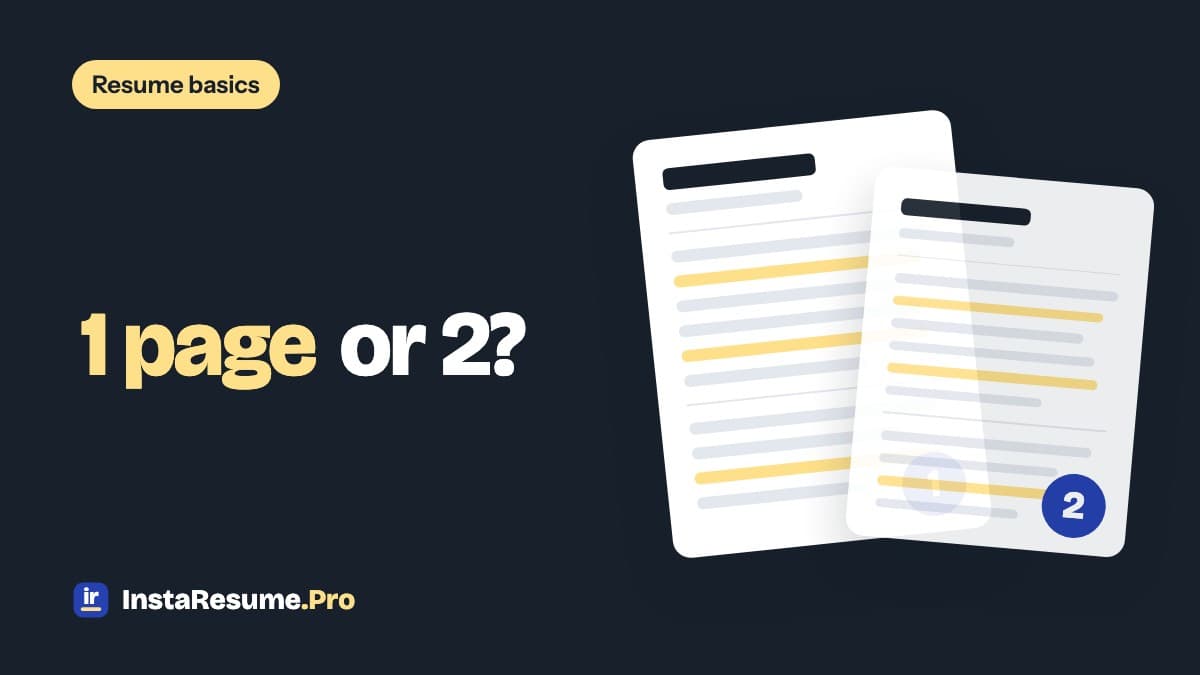
Quick answer: 1 page early in your career, 1–2 pages for most experienced people, and more than 2 pages only for academic, research, or physician CVs. Federal jobs now have a hard limit of 2 pages.
The real rule is simpler than any page count: every line should help you get this job. If it doesn't, cut it.
Resume Length by Experience Level
| Career stage | Recommended length |
|---|---|
| Student, new grad, or apprentice | 1 page |
| 0–5 years of experience | 1 page |
| 5–10 years | 1–2 pages |
| 10+ years, or supervisor and manager roles | 2 pages |
| Senior executive | 2 pages (3 only in rare cases) |
| Academic, research, or physician CV | As long as it needs to be |
| Federal jobs (USAJOBS) | 2 pages maximum |
Nurses, Techs, and the Trades
- New grad nurses and new techs: 1 page. Put your license, certifications, and clinical rotations up front.
- Experienced nurses: 1–2 pages. Two is fine if you have several units, specialties, or charge and precepting experience to show.
- Travel nurses: often 2 pages, because you may have many short assignments. Group contracts by specialty or list them compactly (facility, unit, dates, and bed count on one line) instead of writing full bullets for each one.
- Tradespeople: usually 1 page. Go to 2 if you're a foreman, superintendent, or project manager with a list of significant projects.
- CDL drivers: 1 page is almost always enough. Lead with your CDL class, endorsements, and safety record.
Why 1 Page Is Ideal Early in Your Career
Early-career candidates often try to stretch a thin resume onto two pages with large fonts, extra white space, or padding. Don't.
A tight one-page resume shows that you can communicate clearly and know what matters. If your experience fits on one page, don't force it onto two.
When 2 Pages Is the Right Call
After several years of experience, two pages lets you:
- Show progression across multiple roles
- Include a summary, a skills section, and a full Licenses & Certifications section
- Show the scope of your work: patient population, unit size, crew size, project value, or equipment
Two pages isn't too long as long as both pages are substantial. The test: if you removed a bullet from page 2, would a recruiter miss it? If yes, keep it.
If you go to two pages, put your name and page number on page 2 so it can't get separated from page 1.
Is a 3-Page Resume Ever Acceptable?
For most jobs, no. A third page usually means old roles, repeated bullets, or detail the reader doesn't need. But three pages or more is normal for:
- Academic and research CVs, with publications, grants, presentations, and teaching history
- Physicians and some advanced practice roles, where a full CV with training, board certifications, privileges, and publications is expected
- Some senior executive roles, with many years of significant leadership
And one place where it's not allowed: federal jobs. USAJOBS says federal agencies only accept resumes of up to two pages under the Merit Hiring Plan, and it won't let you upload or build a longer one. That includes VA hospital jobs, a major employer of nurses.
Does ATS Software Care About Page Count?
No. An applicant tracking system reads the text on every page; it's looking for keywords, not counting pages.
Page count matters to the person who reads your resume after it comes up in a search, and people do care.
How to Cut a Long Resume Down
- Remove roles older than about 15 years, unless they're directly relevant. Or list them in a short "Earlier experience" line with titles and employers only.
- Keep 3–5 bullets per job. Your most recent role can have up to 6.
- Delete "References available upon request." Everyone knows.
- Replace an objective statement with a 2–3 line professional summary.
- Combine short or similar roles, such as several travel contracts or seasonal jobs.
- Tighten margins to about 0.75 inches.
- Use a 10.5–11pt body font. It's still readable and saves real space.
For what to keep, see how to write a resume step by step, and how to tailor your resume to a job description to decide what matters for each job.
Get the Length Right Without Starting Over
Paste a job description into InstaResume.Pro and the AI resume builder writes a version aimed at that job, focused on the experience that matters for it, in a clean one- or two-page layout. It's free to build and preview.
InstaResume.Pro Team
Contributing writer at InstaResume.Pro, helping job seekers create compelling resumes and advance their careers.